















Compatible vs OEM Printer Consumables: Which Parts Are Worth Saving On — and Which You Should Never Skimp On
Compatible vs OEM Printer Consumables: Which Parts Are Worth Saving On — and Which You Should Never Skimp On
 2026-12-16
 8


The short answer: stop asking whether a part is "original" or "compatible", and start asking whether it was engineered. Framed that way, the choice stops being about brand loyalty and becomes arithmetic — what the part costs you on the invoice, and what it costs you when it fails.
That distinction matters because the two labels hide wildly different things. A compatible blade machined to a specification and validated on a real machine is not the same product as a forty-cent belt-strip sold without a part number, even though both get called "non-OEM". Conversely, the OEM premium on some parts buys you a great deal of engineering, and on others very little.
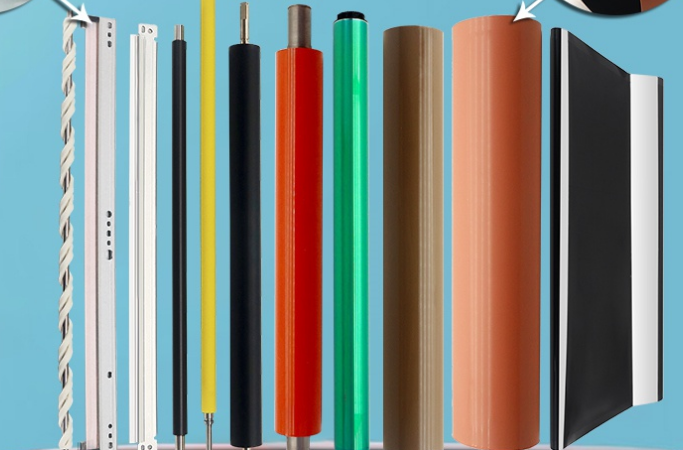
Here is how to tell the difference, part by part.
Settle the Warranty Question First
Almost every buyer hesitates for the same reason: "won't this void my warranty?" In the United States, the answer has been settled since 1975. The Magnuson-Moss Warranty Act prohibits a warrantor from conditioning a warranty on the customer's use of a particular brand of article. A manufacturer may decline to repair damage it can prove a third-party part caused — but the warranty stays intact for every unrelated fault. The same principle runs through EU consumer law and, in China, through the 消费者权益保护法 and 民法典: absent evidence that the consumable itself caused the damage, warranty service cannot simply be refused.
Two practical frictions remain, though, and both are worth planning around:
● Consumables are usually excluded from warranty anyway. Drums, toner, fuser rollers and pickup rollers are classed as wear items in most manufacturers' terms — original or not, they were never going to be repaired for free.
● Firmware is where the real risk lives. A printer maker can ship a firmware update that stops recognising a third-party chip, and it has happened. On a machine still under contract, that is a friction worth avoiding regardless of what the law says.
The Real Dividing Line: Chip-Bound Parts vs Free Parts
Forget original versus compatible. The line that actually predicts risk is whether the part talks to the machine's firmware.
Chip-bound parts — toner cartridges and complete drum units carrying an authentication chip — sit closest to the machine's software. Here the OEM's advantage is structural: it writes the firmware its own chip answers to. The risks are recognition errors, incorrect level reporting, lockouts after a firmware push, and the warranty argument that follows.
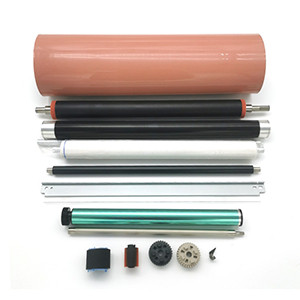
Free parts carry no electronics at all. Cleaning blades, charge rollers, pickup and feed rollers, separation pads, fuser film sleeves, transfer belts — their job is mechanical or a simple electrical spec. A correctly specified compatible version is the same object made to the same numbers. There is no protocol to mismatch, no authentication handshake, and no way for the machine to "know" who made it. This is precisely where the OEM premium buys the least.
Three Tiers: Switch Freely, Switch Carefully, Don't Skimp
The rule under the table is simple: the greener the tier, the less reason to pay OEM prices; the redder the tier, the more the OEM premium is really a warranty against a very expensive failure.
Why "Cheaper" and "Saves Money" Are Not the Same Thing
Unit price is the least useful number in this decision. What matters is total cost per page:

Quality-compatible consumables typically run at 10–40% of the OEM price, which is where the appeal comes from. But independent testing shows how wide the quality spread is inside that "compatible" bucket:
● A European Commission Joint Research Centre report put the failure rate of non-OEM toner cartridges at roughly 10%, against about 3% for OEM.
● Independent lab SpencerLab's 2024 colour-cartridge study found reliability problems in 91.7% of cloned brands, and found OEM colour cartridges produced about 50% more usable pages.
● A Lexmark-commissioned study reported that printers running third-party cartridges jammed at roughly 25 times the rate of OEM, and that OEM cartridges delivered 52,294 test pages against 36,822 across the aftermarket brands tested.
Read together, those numbers say one thing: a part priced at 30% of OEM that fails three times as often, on a machine where the failure takes a drum unit down with it, is the expensive choice — not the cheap one. The point is not to avoid compatible parts. It is to avoid unverified ones.
Tier 1 (Green): The Parts Worth Switching
These are the parts where a well-made compatible unit is functionally the same object as the OEM part, at a fraction of the price — and where the savings land straight on your monthly consumables line.
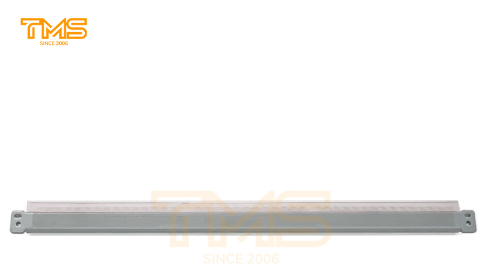
Drum cleaning blades.
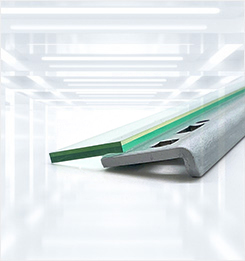
No chip, a simple shearing job, and the highest-volume wear item in any fleet. TMS builds these as a product line with dedicated tooling: the Toshiba e-STUDIO 5520C double-layer blade (TMS2171G-TH) and the Xerox WorkCentre 7425 double-layer blade (TMS2090G-TH) both use a multi-layer construction developed for 40 ppm-and-above machines, where single-layer blades give out early.
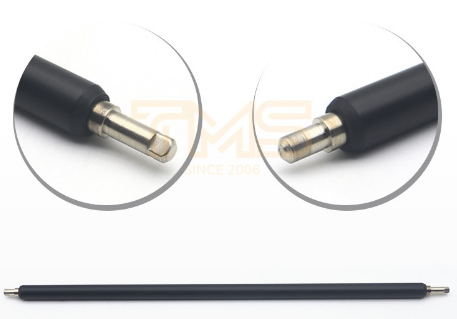
Charge rollers.
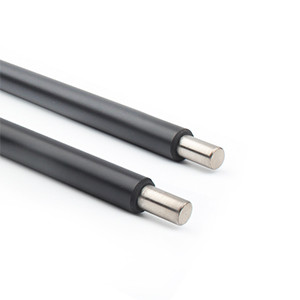
A conductive rubber compound with a specified surface resistance — a physical spec, not a software handshake. The Ricoh MP C3003 series charge roller (TMS2128C) covers the C3003 through C6003 generation plus the IM C3000–C6000 platform on a single part number.
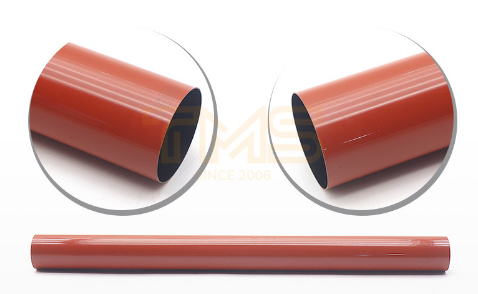
Fuser film sleeves.
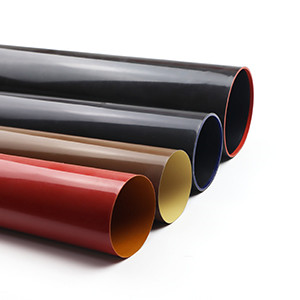
The release coating and thermal stability are the whole specification, and a tested compatible sleeve restores performance at a fraction of the OEM unit price. The Sharp BP-50M26 sleeve (TMS5197G) cross-references BP-FB703 and covers the current 50M/70M and 50C/70C ranges.
Feed and pickup rollers, separation pads. Pure friction parts. Replace on schedule, buy on price, expect no drama.
Tier 2 (Amber): Switch, But Only From a Manufacturer That Tests
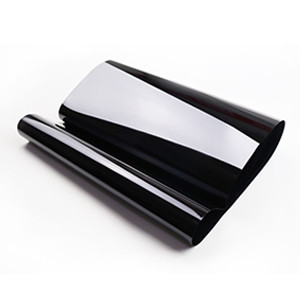
Colour fuser film sleeves, drum units and transfer belts sit a rung higher, because the consequences of a bad batch reach further. Colour machines run hotter than the mono units beside them, and a sleeve or belt that is marginally off-spec shows up as smeared toner, colour drift or a contaminated fuser. This is still a green-light category for a manufacturer with real test data — the Konica Minolta bizhub C558 colour sleeve (TMS5206G) covers the C558/C658/C758/C808/C659/C759 family — but it is not a category for an unbranded part with no specification sheet.
Tier 3 (Red): Where the OEM Premium Is Actually Worth Paying
Three situations justify paying up, and none of them is about brand loyalty:
● A machine still under a service contract or warranty, where a chip mismatch could hand the manufacturer an argument you do not want to have.
● Any part sold without a part number, batch code or model list. No traceability means no recourse, and the failure rate in that bucket is not a matter of bad luck — it is the whole business model.
● Toner on a machine whose fuser and drum you cannot afford to replace, where formulation quality is doing real work.
What "Never Skimp" Should Actually Mean
The phrase gets misread as "always buy OEM". It does not mean that. It means never buy a part that cannot tell you what it is. The floor is a manufacturer who publishes a model list, warrants the batch, and tests on the machine the part is meant to fit — everything above that floor is a price negotiation you are entitled to win.aves like the last one.
That is exactly the standard TMS builds its compatible parts line around. The problem with most aftermarket suppliers is never that they cannot make a working blade or roller once — it is that the specification behind the part number is not stable. The same SKU can ship with formulation A in one batch and a two-degree-harder polymer B in the next, when raw material prices move; the technician only finds out when an edge flips or a drum gets scored, with no way to trace which batch was at fault. TMS takes the opposite approach: every TMS part number locks to a fixed production specification — edge angle, polymer hardness, surface treatment, all written into the production file and not changed when input prices shift. What you receive this month is the same part you received three months ago, or a year ago.
The compatibility list under each part number is also not "close enough" marketing copy — it is the exact range validated on real machines before batch release, covering everything from current Sharp BP colour units to decade-old legacy models most suppliers no longer produce, all listed in a public model table. New buyers do not need to meet a full-carton MOQ to test; orders can be assembled around your last 30 days of fault calls — more blades if flipped edges are the common fault, more fuser sleeves if rub-off is spiking, mixed exactly to what you are seeing in the field. Long-term service partners can send over their full fleet list and receive a matched part number sheet for every wear item in the building, no cross-referencing required from the bench.


