
















What are the consumables for a laser printer?
What are the consumables for a laser printer?
 2026-08-13
 750
750


1. Core Logic of Laser Printer Consumables
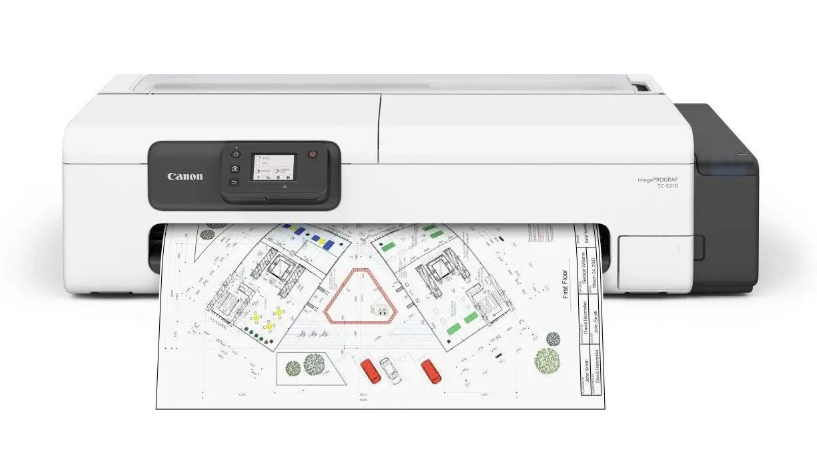
The imaging principle of laser printers is based on xerography technology. The entire printing workflow is divided into 6 core steps: charging, exposure, developing, transfer, fusing and cleaning. Each step corresponds to a dedicated precision consumable component. Different from inkjet printers that rely on liquid ink for imaging, laser printers complete image output through electrostatic adsorption of solid toner. Therefore, their consumable system features longer service life, lower per-page printing cost, and is more suitable for commercial office scenarios with large daily printing volume.
Many users easily fall into the misunderstanding of "only replacing toner while ignoring other consumables" in daily use. In fact, aging and wear of consumables in any link will directly affect the final printing effect, and even cause irreversible damage to the whole machine hardware.
2. Detailed Breakdown of All Categories of Consumables
2.1 Imaging Drum Unit (Toner Cartridge)
As the core imaging carrier of laser printers, the core part of the toner cartridge is the aluminum alloy photosensitive drum whose surface is coated with organic photoconductive (OPC) material. Under normal conditions, the surface of the photosensitive drum is uniformly applied with negative charges by the primary charge roller. After laser exposure, the charge on the irradiated area disappears, forming an invisible electrostatic latent image, which then adsorbs toner with opposite charges to complete the preliminary formation of the image.
Material Features: Mainstream photosensitive drums adopt a three-layer structure. The bottom layer is a conductive aluminum alloy substrate, the middle layer is a photoconductive transition layer, and the surface layer is a wear-resistant photoconductive coating. High-quality drum units can reach a wear-resistant service life of 30,000 to 50,000 pages.
Common Faults: Scratches on the drum surface will cause penetrating black lines on the page, aging of the drum layer will lead to overall background fog, and sealing failure of the drum unit will cause toner leakage that pollutes the inside of the equipment.
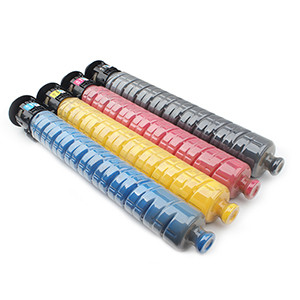
2.2 Toner
Toner is the "imaging pigment" for laser printing, which belongs to micron-level fine powder. The particle size of mainstream commercial toner is controlled between 5μm and 12μm, and it consists of four core components: resin matrix, carbon black pigment, charge regulator and lubricant.
Classification Differences: Traditional physical toner is made by mechanical crushing and grinding, which has low cost but poor particle size uniformity. Chemically polymerized toner is produced through liquid phase synthesis process, with round and uniform particles, sharper printed text edges, lower fusing temperature, and can effectively reduce equipment energy consumption.
Purchase Misunderstanding: Using inferior toner will cause problems such as unfixed toner that falls off when rubbed by hand. Fine waste toner will also block the waste toner bin, even scratch the surface of the photosensitive drum, greatly shortening the service life of the equipment.
2.3 Fuser Assembly
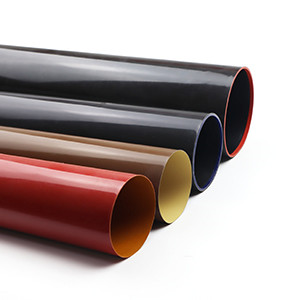
The fuser assembly is the core component that determines the final firmness of printed text. It consists of a heating roller (or fuser film), pressure roller, heating ceramic sheet and temperature sensor. The internal working temperature can reach 150℃ to 220℃. It melts the toner particles adsorbed on the paper surface through high temperature and high pressure, and permanently cures them in the fiber gaps.
Wear Characteristics: Long-term high-temperature operation will wear the Teflon non-stick coating on the surface of the fuser film, causing problems such as toner staining on the page and incomplete fusing. After the rubber layer of the pressure roller ages, the pressure will be uneven, resulting in unfixed text on one side of the page.
Maintenance Tips: Regularly clean the residual overflow toner on the surface of the fuser assembly to avoid long-term high-temperature carbonization of toner that scratches the surface layer of the fuser film.
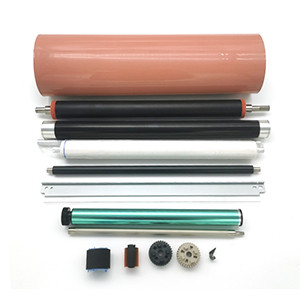
2.4 Peripheral Supporting Precision Consumables
In addition to the three core consumables, there are four types of easily overlooked supporting consumables that directly determine the stability of printing effects:
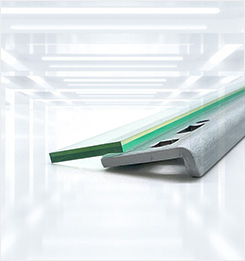
Cleaning Blade: Made of high-wear-resistant polyurethane, it is responsible for scraping residual waste toner on the surface of the photosensitive drum. After the blade edge wears, periodic black lines will appear on the page.
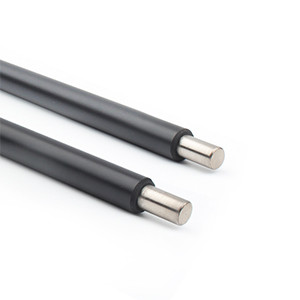
Primary Charge Roller: Its outer layer is wrapped with conductive sponge or conductive rubber, responsible for uniformly applying electrostatic charge to the photosensitive drum. After the surface is contaminated, there will be printing problems such as uneven overall density.
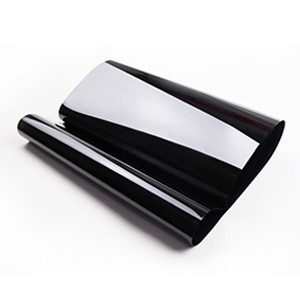
Transfer Roller: It transfers the toner image on the drum surface to the paper through a high-voltage electric field. After the resistance value shifts, faults such as incomplete image transfer and page blanking will occur.
Waste Toner Bin / Waste Toner Box: Collects the residual waste toner scraped off by the cleaning blade. After the capacity is full, it must be emptied or replaced in time to avoid waste toner overflow that pollutes the inside of the equipment.
3. Core Advantages of TMS Consumables
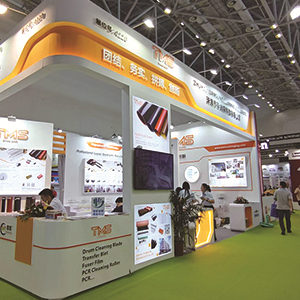
As a professional manufacturer with nearly 20 years of dedication in the OA consumables field, TMS relies on a 90,000 ㎡ intelligent manufacturing industrial park and a material R&D team of more than 70 people to build a full-series compatible laser printing consumables productmatrix:
Full SKU Coverage: The products cover more than 2300 SKUs including imaging drums, toner, cleaning blades, PCRs and fuser films, which can adapt to more than 13,000 mainstream laser printer and copier models, covering full-scenario demands from small household equipment to commercial high-speed multi-function copiers.
Strict Quality Testing: All products have passed 72-hour continuous operation tests in extreme environments such as -20℃ extreme cold, 45℃ high temperature and 90% high humidity, to ensure stable operation in different office environments across different regions.
Long Service Life Design: The specially reinforced surface coating of TMS self-developed photosensitive drum has a wear-resistant life more than 30% higher than the general industry products. The toner adopts imported polymer raw materials, with a transfer rate as high as 95%, which greatly reduces the per-page printing cost.


