
















Bulk-Buying Printer Consumables, from Selection to Delivery: Three People Behind One Order
Bulk-Buying Printer Consumables, from Selection to Delivery: Three People Behind One Order
 2026-12-24
 3


What decides a bulk consumables order is rarely the unit price — it is whether every link from selection to delivery has a fixed person on the other end. TMS assigns each bulk buyer a "three-to-one" team: commercial, technical and order-tracking, one segment each, so the buyer only hands over the requirement.
A cross-border order passes five gates: selection, sampling, production, shipping and arrival. Each gate below names what the buyer does and who picks it up on the TMS side.
1. Selection — turn your installed base into a quotable parts list
Your move: list every machine with its suffix and rough monthly volume; one machine's wear parts often span three or four categories.
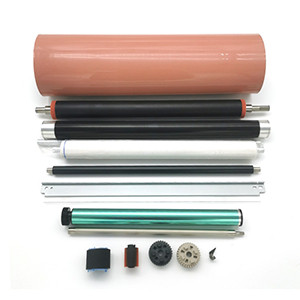
Our side: an engineer recommends material and model by machine, volume and service life — fuser films come in PI, nickel and steel; transfer belts in PI, PA, silicone and PU — then the commercial contact quotes against the list. If a model is unmatched or discontinued, send the old part for reverse matching.
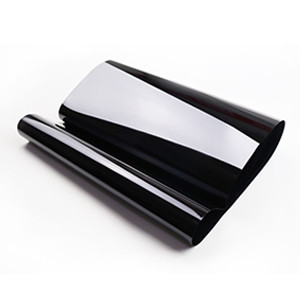
● Transfer belts: TMS4091T (HP M252, cross-reference RM2-5907-000), TMS4041T (Ricoh MP C3003, cross-reference D1496207), TMS4032T (Kyocera TASKalfa 2552ci).
● Transfer roller units: TMS9035Z12 (Konica Minolta bizhub 223, cross-reference A1UDR70500).
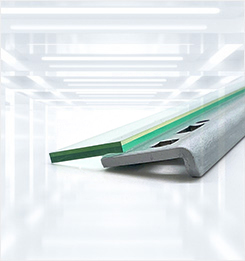
● Blades: TMS111B (Xerox P355), TMS105B (Kyocera FS-2000).
2. Sampling — get the physical part before you commit to volume
Your move: sample the uncertain models first, run them on the real machine, and lock the charge and fusing parts in the same round.
Our side: conventional samples ship within 2–3 working days; specification sheets, inspection reports and material descriptions come free with the sample. Non-standard sizes can be developed from your sample or drawing.
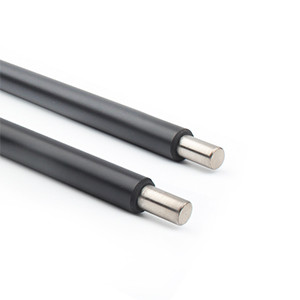
● Primary charge rollers: TMS150C (Canon iR ADVANCE C250), TMS238C (Kyocera TASKalfa 3500i), TMS202C (HP M433a).
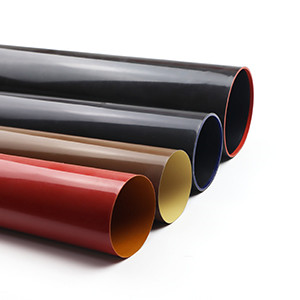
● Fuser films: TMS5193G (Kyocera 3050ci), TMS5022G (Konica Minolta bizhub 654, cross-reference A2X0R71011-Film), TMS5159G (Toshiba e-STUDIO 5520C).
3. Production & lead time — turn "how long" into trackable nodes
Your move: confirm volume, packing and the port of arrival, and state labels and receiving rules once.
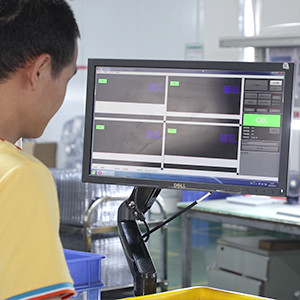
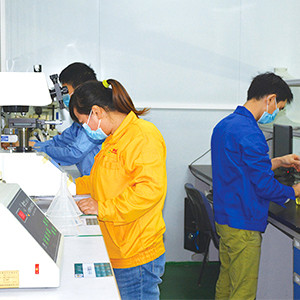
Our side: standard bulk goods ship in 3–15 days, customised lead time on agreement; the tracking contact reports progress during production. Everything is fully inspected before dispatch — fit first, then wear and failure rate.
4. Shipping & documents — packing and paperwork in one pass
Your move: supply shipping marks, labels and the product elements customs needs.
Our side: export business runs alongside standard export packaging, with spec sheets, inspection reports and material descriptions issued with the goods. Parts of different categories can be combined into a single order and shipped together, avoiding re-consolidation.
5. Arrival & after-sales — who picks up the phone
Your move: record the failure point and the test print (grey background, black lines, poor fusing) so it can be located fast.
Our side: the technical team guides installation, commissioning and troubleshooting online; the same part number stays consistent across batches.
6. Who the "three-to-one" team actually is
● Commercial: requirement scoping, cost analysis, quotation and order progress — the whole line.
● Technical: selection, fitment, commissioning and troubleshooting; the first call when something fails.
● Order-tracking: production scheduling, packing, shipment and documents, keeping the promised date real.
All three work from the same machine-and-part record, so you never re-describe your fleet at three different windows.


